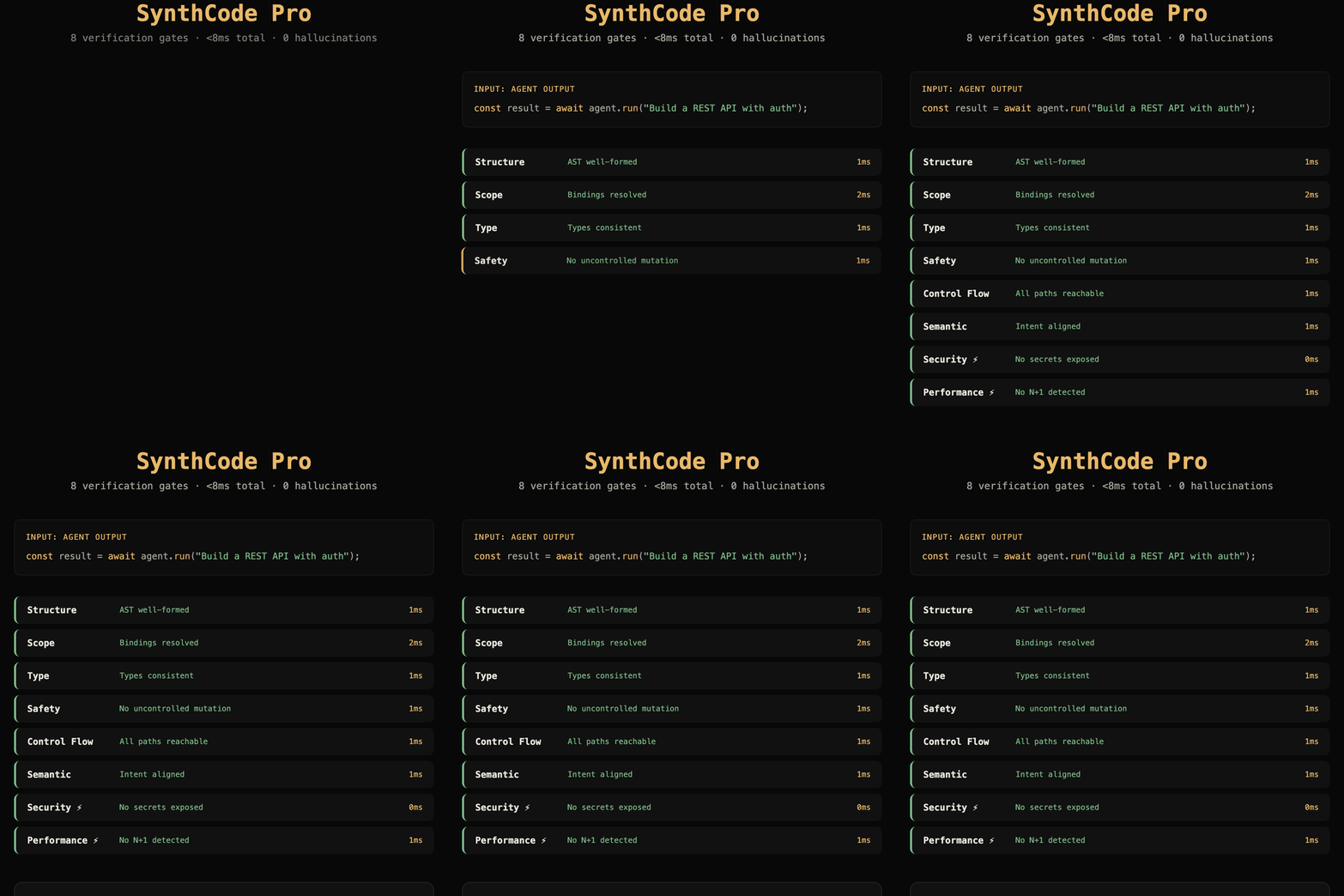
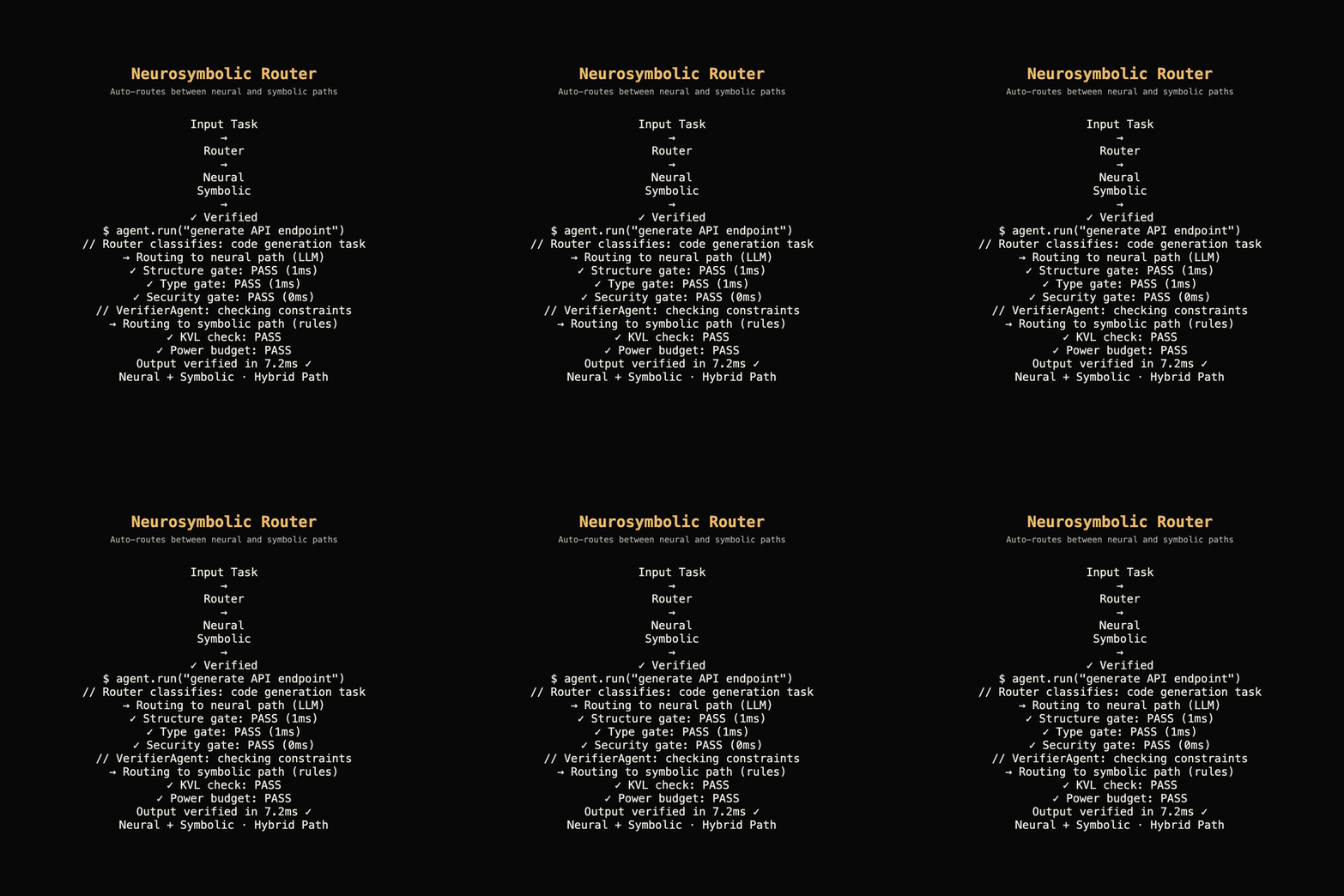
Multi-layer verification gates and neurosymbolic reasoning catch LLM mistakes in real-time. Ship autonomous agents you can actually trust.
Start Preventing Hallucinations →
As AI agents become more autonomous, the cost of hallucinations grows exponentially. A single confident-but-wrong output from a production agent can cascade into broken workflows, lost revenue, and eroded user trust. Prompt engineering alone cannot solve this — you need structural safeguards.
Research consistently shows that even state-of-the-art LLMs hallucinate between 3-27% of the time depending on domain complexity. In production settings where agents make hundreds of decisions per minute, that's not a edge case — it's a guarantee.
Effective hallucination prevention requires moving beyond prompt-level strategies to architectural safeguards. Here's what actually works at scale:
The key insight: hallucination prevention isn't about building better prompts. It's about building verification architectures that treat LLM outputs as untrusted inputs — because that's exactly what they are.
Your AI agent produces a decision, response, or action as it normally would. Nothing changes in your agent's architecture.
Every output routes through SynthCode Pro's verification pipeline: fact-checking, schema validation, confidence scoring, and logic verification run in parallel.
Verified outputs execute instantly. Flagged outputs are rolled back, logged, and routed to your fallback handler. You get full visibility into every decision.
Join teams building production-grade AI agents with structural hallucination prevention. Start free with the LAUNCH20 promo.
Get Early Access — 20% Off →AI hallucinations occur when LLMs generate confident but factually incorrect outputs. Common causes include training data gaps, prompt ambiguity, lack of grounding context, and insufficient output validation. Production agents are especially vulnerable because they operate autonomously without human review at each step.
SynthCode Pro uses a multi-layer approach: neurosymbolic verification gates that cross-check LLM outputs against formal logic, real-time fact-checking against your knowledge base, confidence scoring with automatic rollback, and structured output validation that catches inconsistencies before they propagate.
SynthCode Pro's verification gates add less than 50ms latency per decision on average. The system uses parallel verification pipelines so checks happen concurrently with agent execution, not sequentially. Most teams find the negligible overhead far outweighs the cost of hallucination incidents.
Any autonomous agent that makes decisions without human-in-the-loop benefits significantly. This includes customer support agents, code generation agents, data analysis agents, financial reporting agents, and medical information agents. The higher the stakes of a wrong output, the more critical hallucination prevention becomes.
Prompt engineering is a band-aid, not a solution. It reduces but never eliminates hallucinations because you're still relying on the LLM to police itself. SynthCode Pro implements external verification layers — formal logic checks, knowledge base grounding, and output validation — that the LLM cannot bypass or self-deceive through.