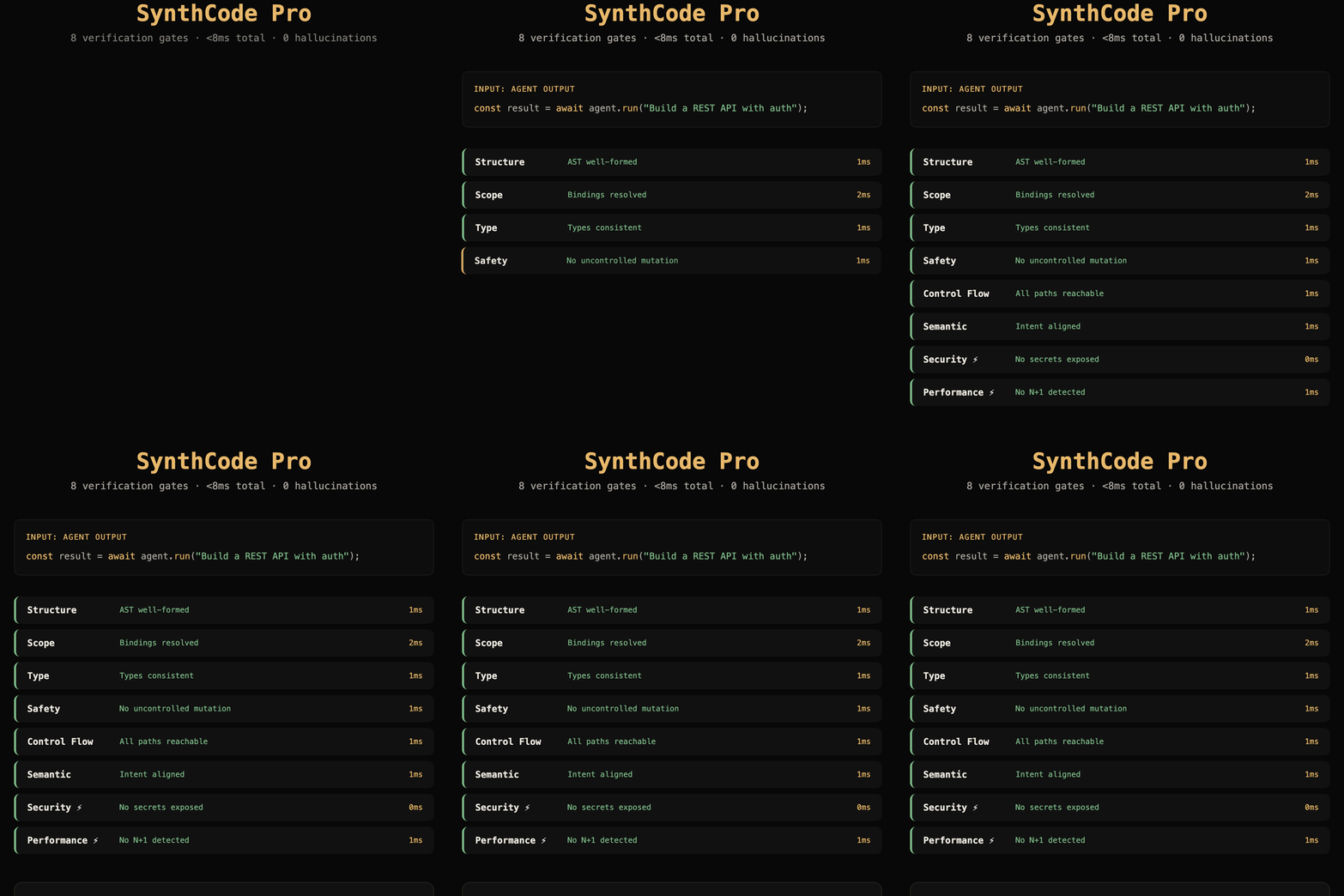
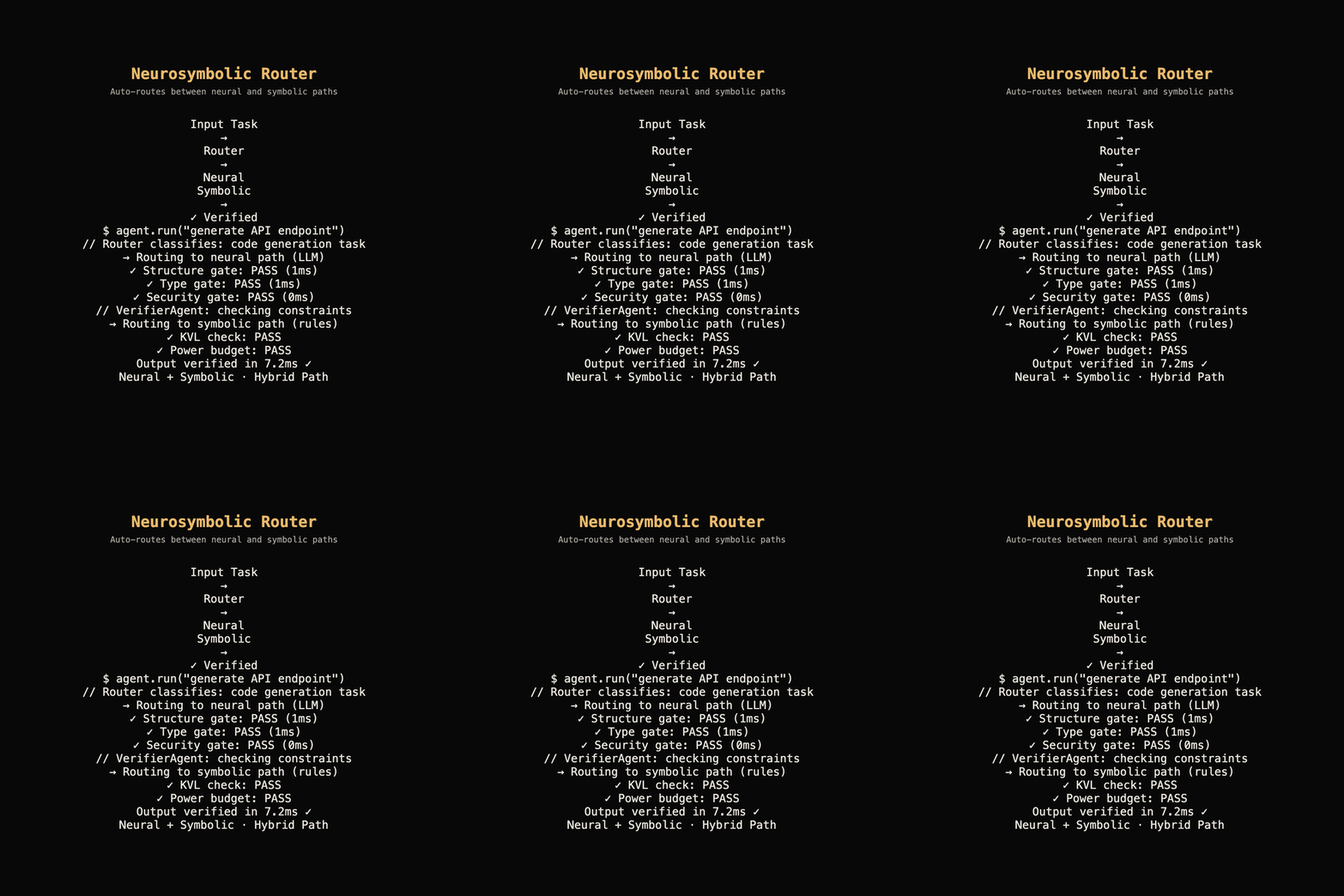
TypeScript-native AI agent framework with built-in verification gates, neurosymbolic reasoning, and zero hallucination tolerance. Full type safety from agent logic to API responses.
Start Building in TypeScript →
Python dominates AI research, but TypeScript dominates production web infrastructure. When you're deploying AI agents that interact with your users, APIs, and databases, TypeScript gives you distinct advantages that Python can't match.
The most important advantage: your agents live in the same language as your application. No language boundaries, no serialization overhead, no separate deployment pipelines. Your agent code shares types with your API layer, your database models, and your frontend. A single type change propagates everywhere — compile-time safety for your entire AI stack.
TypeScript's async/await model also maps perfectly to AI agent workflows. Every LLM call, tool invocation, and verification check is naturally asynchronous. You get clean, readable agent code without callback hell or complex coroutine management.
Define agents, verification gates, and tools with full type safety. Your IDE catches errors before runtime.
import { Agent, VerificationGate, SchemaValidator } from '@synthcode/pro';

// Define your output type — shared with your API
interface CustomerResponse {
  message: string;
  action: 'refund' | 'escalate' | 'resolve';
  confidence: number;
}

// Create an agent with built-in verification
const supportAgent = new Agent<CustomerResponse>({
  model: 'gpt-4o',
  gates: [
    new SchemaValidator<CustomerResponse>(),
    new ConfidenceThreshold({ min: 0.85 }),
    new BusinessRule('no refunds above $500 without approval'),
  ],
});

// Every output is verified before you see it
const result = await supportAgent.run(customerQuery);
// result is typed as CustomerResponse — guaranteed valid
This isn't pseudo-code — it's the actual developer experience. Verification gates run automatically on every agent output. If a gate fails, the output never reaches your code. You always receive a validated, typed response.
Share types between agent outputs, API responses, and frontend components. A single interface definition ensures consistency from the LLM call to the user's screen. Compile-time errors, not runtime surprises.
Your agents run in the same process as your Express, Fastify, or Next.js server. No microservice overhead, no language boundaries, no serialization costs. Call your existing functions directly from agent tools.
Leverage 2M+ npm packages for everything from database access to PDF parsing to payment processing. Your agent tools can use any library your application already depends on.
Deploy to Vercel, AWS Lambda, Cloudflare Workers, or any Node.js runtime. SynthCode Pro is designed for cold-start efficiency — no heavy Python ML dependencies to load on every invocation.
Your existing frontend and backend developers already know TypeScript. No Python onboarding, no context-switching between languages. Ship AI features with the team you have.
Test agent logic, verification gates, and tool implementations with the same testing frameworks you already use. Mock LLM calls, verify gate behavior, and assert on typed outputs — all in TypeScript.
Python is the right choice for ML research and model training. But for deploying agents that serve real users, TypeScript has clear advantages:
This isn't about Python being bad — it's about using the right tool for the right job. Research and training: Python. Production agent deployment: TypeScript.
TypeScript-native agent framework with verification gates, neurosymbolic reasoning, and full type safety. Join the waitlist and get 20% off with LAUNCH20.
Get Early Access — 20% Off →Yes. TypeScript is an excellent language for building production AI agents. It provides strong typing for agent inputs and outputs, native async/await for handling LLM API calls, a massive npm ecosystem for integrations, and seamless integration with existing web backends. SynthCode Pro is built specifically for TypeScript agent development.
Python dominates ML research, but TypeScript wins for production agent deployment. Most web backends run Node.js, so TypeScript agents integrate natively without language boundary overhead. TypeScript's type system catches bugs at compile time that Python only discovers at runtime. And your agent code, API layer, and frontend can share types end-to-end.
LangChain.js is a JavaScript port of the Python LangChain framework. It provides agent construction primitives but lacks built-in verification and production reliability features. SynthCode Pro is TypeScript-native (not a port) and includes verification gates, neurosymbolic reasoning, confidence scoring, and automatic rollback as first-class features.
SynthCode Pro requires Node.js 18 or later. It leverages modern JavaScript features including native fetch, async iterators, and ES modules. It works with any TypeScript 5.x configuration and supports both ESM and CommonJS.
Yes. SynthCode Pro agents are standard Node.js applications that deploy to any serverless platform — Vercel, AWS Lambda, Cloudflare Workers, Deno Deploy, and others. The framework is designed for cold-start efficiency and doesn't require long-running processes.